





French high schools are experiencing an unprecedented crisis. On Thursday, October 8, 2026, protests erupt in Île-de-France, Lyon, and Marseille, disrupting 375 establishments. Students, united in their discontent, express clear demands.
In response to this unrest, the Minister of National Education, Édouard Geffray, speaks out to calm tensions. What are the reasons behind this movement, and what responses will be provided? The education of our youth is at stake, and it is crucial to understand the current issues.
Context of the High School Protests
Reasons for the Mobilizations
The high school protests on Thursday, October 8, 2026, are the result of growing dissatisfaction among students. Several factors explain this unrest:
- Shortage of Resources: Many schools suffer from a lack of financial resources.
- Learning Conditions: Overcrowded classes make teaching difficult.
- Contested Reforms: Recent reforms are deemed unsuitable by the students.
These reasons are often expressed during gatherings, where students are calling for immediate improvements.
A National Movement in Full Expansion
On Thursday, the protests are not limited to a single city. They are affecting several regions, notably:
- Île-de-France
- Lyon
- Marseille
With 375 schools disrupted, this movement appears as a strong signal of mobilization. Students are increasingly united in their struggle for a better educational future.
This phenomenon seems to be intensifying, with support emerging from various backgrounds, including parents and teachers.
Reaction of the Minister of National Education
Speech by Édouard Geffray
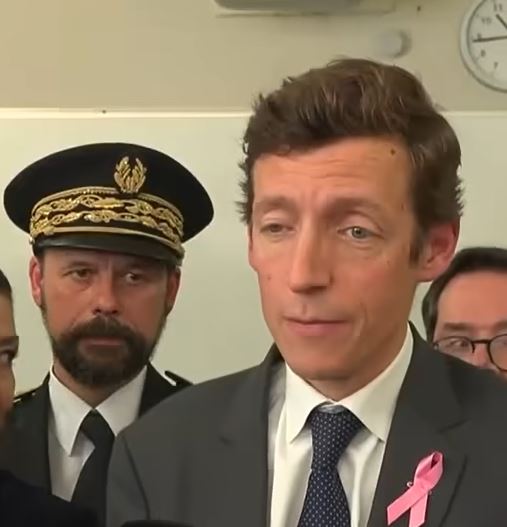
The Minister of National Education, Édouard Geffray, spoke to respond to the protests shaking high schools in Île-de-France, Lyon, and Marseille. His speech aims to reassure students, parents, and educational staff.
In his address, he emphasized the importance of dialogue between the government and education stakeholders. He acknowledged the concerns of students regarding learning conditions and promised attentive listening.
Measures Announced to Calm the Situation
To address current issues, several measures have been announced:
- Increase in the budget allocated to education
- Strengthening of teaching teams in the most affected schools
- Creation of psychological support cells for students
These initiatives aim not only to ease tensions but also to improve school living conditions. Édouard Geffray stressed the need for swift action to prevent an escalation of protests.
Impact on Schools
Assessment of Disruptions in High Schools
The protests of October 8, 2026, have had a significant impact on schools. Nearly 375 high schools in Île-de-France, Lyon, and Marseille experienced disruptions. These events led to:
- Classes being canceled or postponed
- A tense atmosphere within the schools
- Logistical disruptions for administrations
Schools had to quickly adapt to this situation. Teaching teams had to make extra efforts to maintain contact with students during this difficult period.
Consequences for Students and Teachers
The consequences of these protests are felt by both students and teachers. Students face increased learning difficulties. Here are some observed impacts:
- Difficulties in keeping up with the school curriculum
- Stress and anxiety related to school uncertainty
- Feeling of insecurity within the school environment
For teachers, the situation is also complex. They must manage students' concerns while maintaining an educational framework. This requires great adaptability and increased support from the administration.
Reactions from Unions and Students
Support or Opposition to the Protests?
Unions and students have varied views on the protests shaking high schools. Some strongly support the movement, while others prefer to take a more reserved position.
Unions like the FNSE (National Federation of Education Unions) express their solidarity with the protesters. They believe that the demands are legitimate and urgent. On the other hand, some unions fear that these movements could harm the image of education.
The Role of Unions in the Movement
Unions play a key role in organizing the protests. They mobilize students and teachers, providing a framework for discussion and negotiation. Here are some of their actions:
- Organizing meetings to discuss demands.
- Disseminating information about actions to be taken.
- Coordinating with other unions to strengthen the movement.
They also seek to establish a dialogue with the Ministry of National Education to find sustainable solutions to the problems faced in schools. Thus, their involvement can influence the outcome of the protests and the school climate.
Future Perspectives for the Educational System
Necessary Reforms to Avoid Future Crises
The French educational system is going through a turbulent period. Recent protests show an urgent need for reforms. Here are some avenues to explore:
- Improving Working Conditions: Teachers must have adequate resources.
- Strengthening Dialogue: Establishing stronger communication between the ministry and schools.
- Adapting School Curricula: Programs must evolve to better prepare students for the modern world.
These reforms could help stabilize the climate in high schools and reduce tensions.
Government Commitment to Education
The Minister of National Education, Édouard Geffray, affirmed his commitment to education. He promised to:
- Invest in Education: Increase the budget allocated to schools.
- Listen to Demands: Take into account the concerns of teachers and students.
- Facilitate Access to Education: Ensure that all students have equal opportunities, regardless of their background.
These actions aim to restore confidence in the educational system and prevent new crises.


