




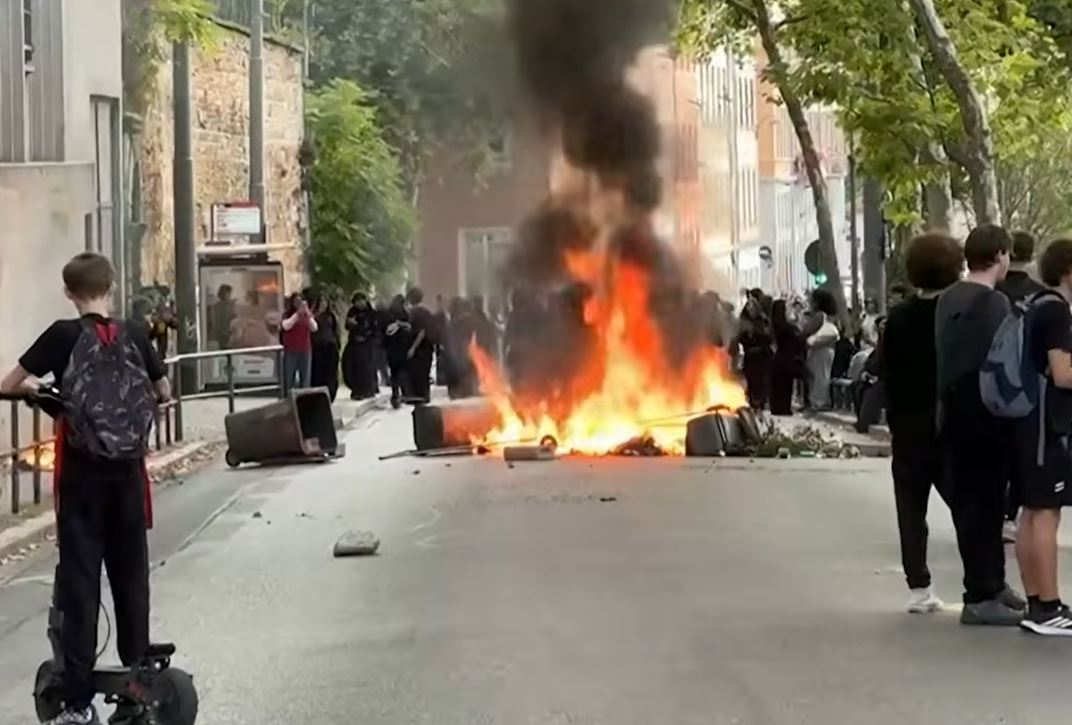

On Tuesday, October 6, 2026, tens of thousands of high school students are mobilizing across France. United with unions and teachers, they are demonstrating to make their voices heard. This convergence of struggles illustrates a youth determined to defend their rights and demand changes in the educational system.
The issues are clear: decent study conditions, a reform of the baccalaureate, and a strong commitment to ecology. Faced with educational policies deemed inadequate, these young people do not hesitate to express their dissatisfaction. They are no longer content to be mere spectators of their future.
As the streets come alive, the question remains: what will be the repercussions of this mobilization on political decisions? The high school students, in search of justice and equality, are ready to fight for a future that resembles them.
Context of High School Student Mobilization
History of High School Protests in France
The high school protests in France have a long history. Since the 1960s, students have mobilized to defend their rights and express their concerns. Each generation has experienced its share of struggles:
- 1970: The first major protests for a fairer educational system.
- 1995: Mobilization against the pension reform, involving high school students.
- 2005: Protests against the law on equal opportunities.
These movements have shown that high school students do not remain passive in the face of decisions that concern them. Today, they continue to make their voices heard.
Current Issues for High School Students
The issues facing high school students are numerous and varied. Here are some of the most pressing:
- Study conditions: Improving access to educational resources.
- Baccalaureate reform: Ensuring a fair diploma for all.
- Environmental education: Raising awareness of climate issues.
These themes are at the heart of students' concerns. They want an educational system that meets their needs and those of society.
The Reasons for the Convergence of Struggles
Support from Unions and Teachers
The solidarity between high school students, unions, and teachers is a key element of this mobilization. The unions, representing education workers, have committed to defending students' rights. They see these protests as an opportunity to strengthen their fight for a quality education.
This support is manifested through:
- Joint speeches during protests.
- Coordinated actions to raise public awareness.
- Increased pressure on political decision-makers.
Impact of Educational Policies on Youth
Recent reforms have a direct impact on the lives of high school students. Many feel excluded and devalued by these changes. Budget cuts and reductions in teaching staff lead to overcrowded classes and a decrease in teaching quality.
Students highlight several concerns:
- Overloaded and poorly adapted curricula.
- A lack of psychological support.
- Poorly maintained school infrastructure.
These factors strengthen their determination to fight for a better future. The convergence of struggles thus helps to give voice to their demands.
The Demands of High School Students
Demands for a Better Educational Future
Students are now protesting to **demand** a fairer and more equitable educational system. They ask for:
- Additional **financial resources** for schools.
- A **reduction in class sizes** to improve learning conditions.
- A **strengthening** of support programs for struggling students.
These demands aim to ensure a solid **educational future** for all students, without distinction.
Fighting Against Police Repression
High school students also oppose **police repression** in schools. They believe that:
- The presence of police in high schools creates a **climate of fear**.
- Police interventions are often **disproportionate** and inappropriate.
- It is crucial to promote **dialogue** rather than confrontation.
Students want their voices to be heard without fear of reprisals. They call for a **reform** of the relations between law enforcement and schools.
Planned Actions for October 6, 2026
Routes of the Protests
On October 6, 2026, **tens of thousands** of students, teachers, and union members will gather in several cities across France. Here are some planned routes:
- Paris: Departing from Place de la République at 2:00 PM, heading to the National Assembly.
- Lyon: Gathering at Place Bellecour at 1:30 PM, marching towards the Prefecture.
- Marseille: Departing from the Old Port at 3:00 PM, heading to the Bouches-du-Rhône Prefecture.
These protests aim to **make the voices** of the youth heard and to **demand changes** in the educational system.
Mobilization on Social Media
Social media plays a key role in mobilization. Hashtags like #LyceensEnColere and #PourUneEcolePourTous are trending. They allow for:
- Organizing online events.
- Sharing testimonials from students.
- Informing about the issues surrounding the protest.
These platforms also enable real-time information sharing, ensuring that the protesters' message reaches a broad audience.
Reactions from Authorities and the Media
Government Responses to the Protests
The government’s reactions to the mobilization of students and unions have been varied. On one hand, some political leaders have expressed their support for the young people's demands. They believe that concerns regarding education and students' futures are legitimate.
On the other hand, some have adopted a more critical tone. They emphasize the need to maintain public order. Here are some key points from government responses:
- Calls for dialogue with student representatives.
- Promises to examine the demands.
- Preparation of security measures for the protests.
Local authorities, particularly prefects, have sometimes decided to ban certain protests, arguing that they risk disrupting daily life.
Analysis of Media Coverage
The media play a crucial role in how the protests are perceived by the public. The media coverage of this day has been intense. Continuous news channels have broadcast live reports, highlighting the massive mobilization.
Here are some notable aspects of the media coverage:
- Interviews with students expressing their concerns.
- Analysis of the underlying issues of the protests.
- Comparisons with past movements, such as those in 2019.
However, some criticisms arise regarding how the media treat such events. Some believe that the focus is too often on isolated acts of violence rather than on the legitimate demands of the protesters.
Future Perspectives for the Student Movement
Evolution of Mobilizations
The student movement is experiencing a constant evolution. Today's protests show that young people are becoming increasingly engaged. They unite with unions and teachers to defend their rights. This phenomenon is not new but is taking on a new scale. High school students use social media to mobilize and organize actions.
Here are some observed trends in mobilizations:
- Use of social media to inform and gather.
- Convergence of struggles between different social groups.
- Intergenerational solidarity with teachers and unions.
Role of Youth in Society
Today's youth are not just students. They are agents of change. Their engagement in social struggles is essential for the future. They carry values such as justice, equality, and sustainability. This movement allows them to make their voices heard and influence decisions that concern them.
Their presence in the streets sends a strong message:
- They want to be heard.
- They demand reforms to improve their future.
- They stand against social injustice.
In summary, the student movement is undergoing a transformation. Young people are taking an increasingly prominent role in public debate. Their commitment is a sign of hope for the future of society.


