




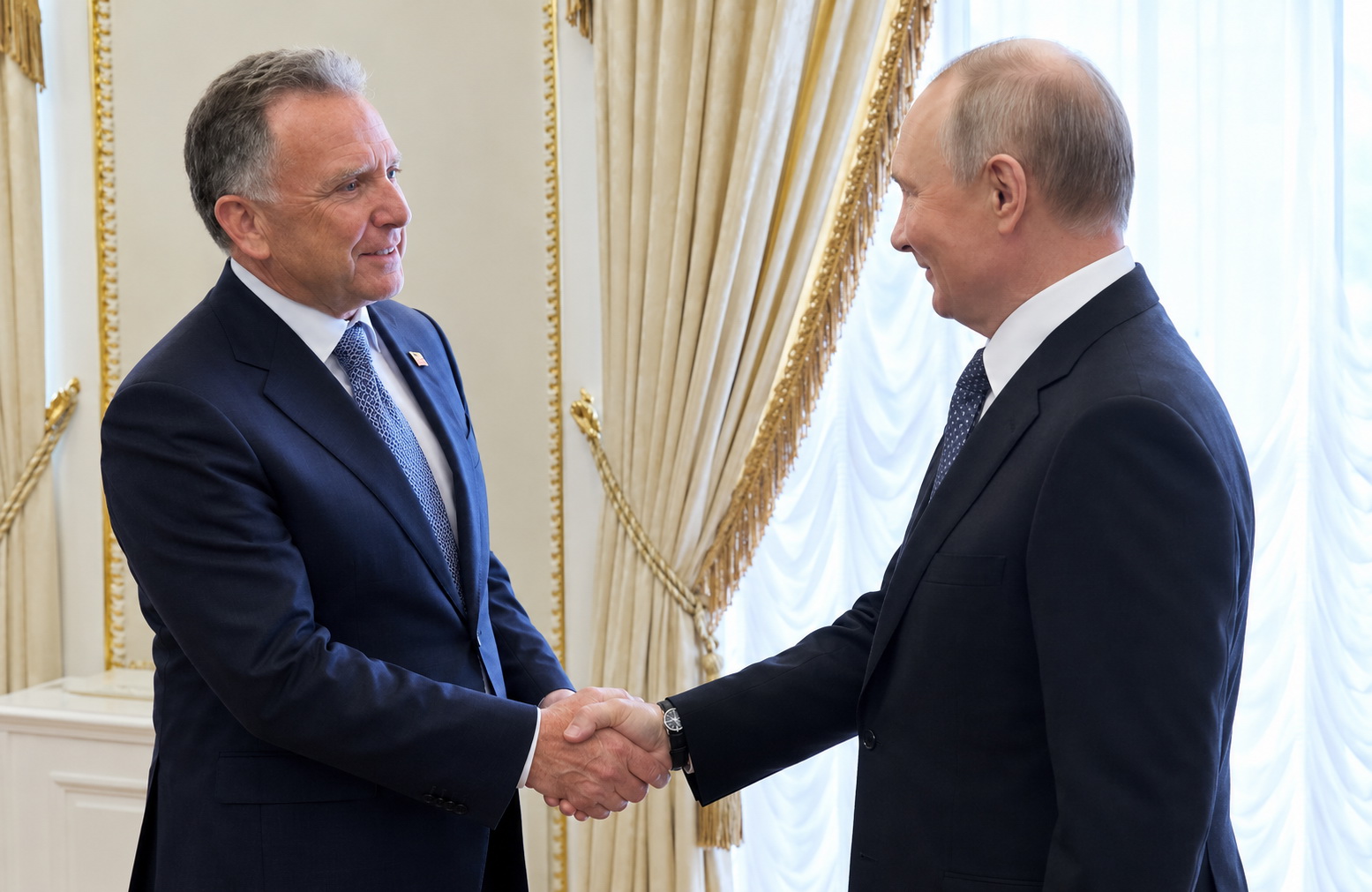

On Wednesday, October 21, 2026, a key moment in international relations occurred. Steve Witkoff, emissary of Donald Trump, traveled near St. Petersburg to engage in dialogue with Vladimir Putin. His praises for the Russian president sparked significant interest. However, despite these accolades, Witkoff returned empty-handed, without any concrete progress towards peace with Kiev.
This visit raises crucial questions about the true intentions of the emissary and the future of relations between the United States and Russia. Why did this mission end in failure? What are the implications for peace in Ukraine? This article delves into the geopolitical stakes at play.
Context of Steve Witkoff's Visit
Current Geopolitical Issues
The visit of Steve Witkoff near St. Petersburg takes place within a complex geopolitical context. For several years, relations between Russia and Ukraine have been strained. Armed conflicts and economic sanctions have exacerbated tensions. Witkoff, as an emissary of Donald Trump, sought to establish a dialogue.
The stakes of this visit are multiple:
- Regional stability: Peace in Ukraine is crucial for security in Europe.
- American influence: Trump aims to strengthen American presence in the region.
- Relations with Russia: A rapprochement could have consequences for international alliances.
The Role of Donald Trump in International Relations
Donald Trump has always had a particular approach to foreign affairs. He prioritizes dialogue and direct negotiations. His strategy is often perceived as a means to redefine U.S.-Russian relations.
As a former president, he played a key role by:
- Encouraging open discussions with world leaders.
- Proposing innovative solutions to conflicts.
- Questioning traditional alliances.
Witkoff, as an emissary, represents this vision. However, his mission in St. Petersburg may not be sufficient to bring peace with Kiev.
Witkoff's Statements on Putin
Praise for the Russian President
During his visit near St. Petersburg, Steve Witkoff expressed laudatory remarks about Russian President Vladimir Putin. Witkoff highlighted several points:
- Putin's ability to maintain stability in Russia.
- His role on the international stage.
- His determination to defend his country's interests.
These statements, while positive, raised questions about Witkoff's true intentions as an emissary of Donald Trump.
Expectations for Lasting Peace
Despite the praise, Witkoff left without concrete advancements regarding a peace agreement with Kiev. His expectations were clear:
- Promote dialogue between the parties.
- Identify solutions to ongoing conflicts.
- Strengthen relations between the United States and Russia.
The outcomes of this meeting indicate that tensions persist and that the path to peace remains fraught with obstacles.
Relations Between Trump and Putin
History of Interactions
The relations between Donald Trump and Vladimir Putin have always been marked by moments of tension and rapprochement. Since Trump's election in 2016, several meetings have taken place:
- A first meeting at the Hamburg summit in 2017.
- A discussion in Helsinki in 2018, where Trump praised Putin.
- Regular exchanges via phone and statements.
These interactions have often sparked debates about transparency and American loyalty to its allies.
Impact on International Diplomacy
The relations between Trump and Putin have had major repercussions on international diplomacy. Here are some notable impacts:
- A reduction of tensions in Eastern Europe.
- An increase in criticism of NATO.
- A shift in strategic alliances.
These elements show how personal relationships influence political decisions on a global level.
Reasons for the Ineffectiveness of Witkoff's Mission
Internal Factors in Ukraine
The mission of Steve Witkoff was hindered by several internal factors in Ukraine. The political situation in the country is complex. Here are some reasons:
- Political divisions: Parties in Ukraine do not always agree on how to approach the conflict.
- Corruption: Persistent corruption complicates negotiations and trust in foreign representatives.
- Popular mobilization: A large part of the Ukrainian population is wary of any form of compromise with Russia.
These elements have profoundly affected Witkoff's ability to establish a constructive dialogue.
Resistance from Moscow and Kiev
Witkoff also faced major resistance from both Moscow and Kiev. The two capitals have diverging interests:
- Moscow seeks to maintain its influence over Ukraine while remaining firm on its territorial claims.
- Kiev remains determined to defend its sovereignty and does not want to yield to Russian pressures.
These tensions make any diplomatic advancement extremely difficult. Witkoff thus returned empty-handed despite his efforts. The road to peace still seems fraught with obstacles.
Future Perspectives for Peace in Ukraine
Role of the United States in the Peace Process
The role of the United States in the peace process in Ukraine is crucial. As a global power, their influence can weigh on the decisions of the involved actors. Here are some important elements:
- Military support: The United States provides military support to Ukraine to strengthen its defense.
- Diplomatic pressure: Washington can exert pressure on Russia to promote dialogue.
- Economic assistance: Economic aid can stabilize the situation in Ukraine and facilitate discussions.
The presence of an emissary like Steve Witkoff could also open channels of communication between the parties. However, success will depend on the willingness of both sides to engage seriously.
Possibilities for Future Negotiations
Future negotiations for peace in Ukraine remain uncertain. Nevertheless, several scenarios may emerge:
- Bilateral dialogues: Direct discussions between Ukraine and Russia could resume.
- International involvement: Other nations or organizations could play a mediating role.
- Sectoral agreements: Agreements on specific issues, such as ceasefires, could be considered.
It is essential that all parties remain open to discussion. Lasting peace requires compromises and sincere commitment.


