




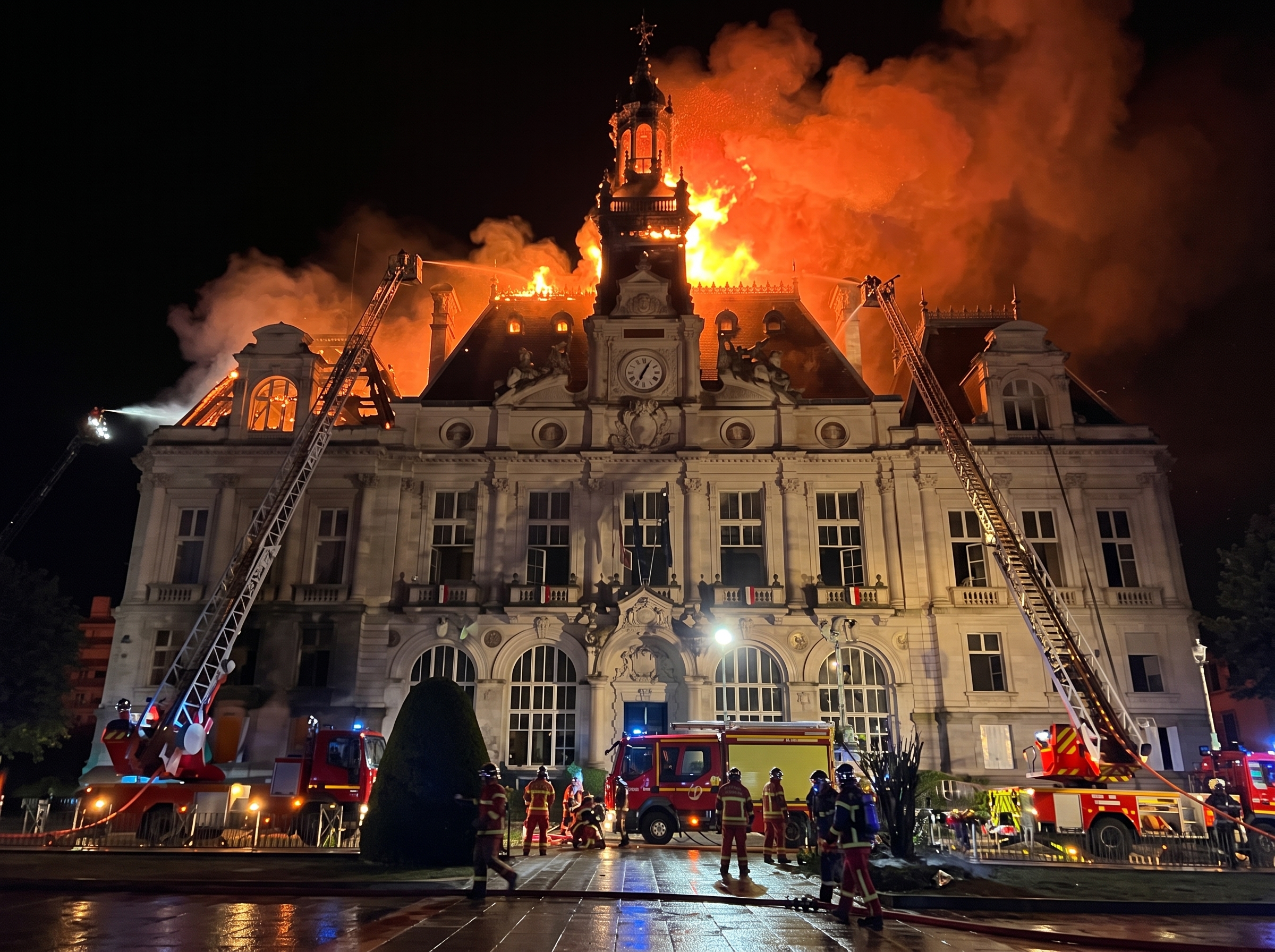

On October 17, 2026, Limoges was shaken by a tragic incident: the fire at its town hall, a strong symbol of the Republic. This act of violence occurred in the heart of a protest against the high cost of living, reflecting a growing anger within the population. Why did such an act of destruction happen in a context where citizens are simply demanding justice and dignity?
The town hall, far more than a building, represents essential values such as democracy and solidarity. This attack raises questions about the social tensions that run through our society. What impact will this event have on the Limoges community? Let’s delve into the details of that fateful day and its consequences.
Context of the Fire in Limoges
Reasons for the Mobilization Against the High Cost of Living
On October 17, 2026, Limoges was the scene of a large mobilization. **Demonstrators** gathered to express their dissatisfaction with the **rising prices**. This situation affects many citizens, notably:
- The significant increase in food prices.
- The energy costs that weigh heavily on household budgets.
- The lack of **purchasing power** for working-class families.
Frustration has intensified over the months, with calls to action from various groups. They sought to make their voices heard in the face of increasingly difficult living conditions.
The Role of the Town Hall as a Symbol of the Republic
The town hall of Limoges represents not only a local institution. It is a **strong symbol** of the French Republic. As such, it embodies values such as:
- **Democracy**.
- **Freedom**.
- **Solidarity** among citizens.
During the demonstrations, the town hall is often the rallying point. It is a place where citizens can express their aspirations and demands. Therefore, the attack on this building has profound significance. It strikes at the very heart of republican values.
The Fire: An Unacceptable Act of Violence
Testimonials from Limoges Residents
The residents of Limoges were deeply shocked by the fire at the town hall. For them, this act represents not only a material loss but also an attack on a symbol of their community and the Republic.
Here are some collected testimonials:
- Marie, 34 years old: "This is a place we visit often. Seeing it burn is a real shock."
- Jean, 47 years old: "I don't understand how people can go this far. The town hall is our heritage."
- Sophie, 22 years old: "I am angry. We need to discuss our problems, not destroy."
Reactions from Local Authorities
Local authorities expressed their outrage at this event. The mayor of Limoges condemned the act of violence:
“This type of behavior is unacceptable. The town hall is a symbol of democracy and must be protected.”
The law enforcement agencies also announced an investigation. They are seeking to identify the perpetrators of this devastation. According to the prefect, it is crucial to ensure safety during future mobilizations.
The Impact on the Limoges Community
Economic and Social Consequences
The fire at the town hall of Limoges had deep repercussions on the community. As a symbol of the Republic, the town hall represents not only local administration but also the identity of the city.
The consequences of this tragic event can be summarized in several points:
- Decrease in tourism: The town hall attracts many visitors. Its destruction could reduce the influx of tourists.
- Financial impact: The city will have to invest significant amounts to rebuild and renovate the damaged infrastructure.
- Loss of services: Essential municipal services may be delayed or suspended, affecting residents.
On a social level, this incident has created an atmosphere of concern and distrust among citizens. The perception of safety in the city is compromised.
Citizens' Solidarity
In the face of this crisis, the solidarity of Limoges residents has been remarkable. Many residents mobilized to help with the reconstruction and support the victims. Initiatives have emerged:
- Fundraising: Fundraising campaigns have been launched to support reconstruction efforts.
- Volunteering: Groups of citizens organized to clean and repair the damage.
- Psychological support: Professionals offered help to those affected by the fire.
This solidarity showcases the resilience of the Limoges community. Together, they are working to rebuild not only buildings but also a spirit of cohesion and solidarity.
Political Responses and Measures Taken
Statements from Elected Officials
Following the fire in Limoges, local elected officials reacted swiftly. They condemned the acts of violence and expressed their support for the victims. Several mayors and political leaders spoke out to emphasize the importance of protecting the symbols of the Republic.
Here are some key points from their statements:
- Condemnation of the violence: Elected officials unanimously denounced the acts of vandalism.
- Support for law enforcement: They praised the courage of police and firefighters.
- Call for responsibility from demonstrators: Elected officials encouraged peaceful dialogue.
Security Measures to Implement
To prevent such incidents in the future, several security measures must be considered. These measures aim to protect public buildings and ensure the safety of citizens during mobilizations.
Among the proposals are:
- Reinforcement of police presence during demonstrations.
- Installation of security barriers around sensitive buildings.
- Creation of an emergency plan in case of overflow.
These initiatives aim to maintain public order while respecting the right to protest. Elected officials must act quickly to restore citizens' trust.
Reflections on Violence in Demonstrations
Analysis of Underlying Causes
The violence observed during the mobilization against the high cost of living in Limoges raises important questions. Why do demonstrators, often peaceful, get drawn into acts of violence? Here are some possible causes:
- Social frustration: Growing inequalities can provoke a sense of injustice.
- Radicalization: Some groups may exploit these events to express extreme ideas.
- Manipulation: Malicious individuals may infiltrate peaceful demonstrations to create chaos.
A thorough analysis of these factors is essential to understand the phenomenon of violence in demonstrations. This would allow for better targeting of solutions to be implemented.
Towards a Reform of the Right to Protest
In the face of this violence, the question of the right to protest arises. How can we ensure a balance between respecting this fundamental right and public safety? Here are some avenues to explore:
- Strengthening dialogue: Encouraging dialogue between authorities and demonstration organizers.
- Training law enforcement: Training officers to manage tense situations without resorting to violence.
- Regulating demonstrations: Implementing measures to prevent overflow.
These reforms could help preserve the right to protest while reducing the risk of violence.
Conclusion: A Call for Peace and Reflection
The Importance of Dialogue
It is essential to promote dialogue among the various parties. Social tensions, like those observed during the mobilization against the high cost of living, can lead to dramatic situations. The destruction of public buildings, symbols of the Republic, underscores the urgency of finding peaceful solutions.
A constructive exchange can help to:
- Understand citizens' demands.
- Establish communication channels with authorities.
- Prevent future conflicts.
Building a Future Without Violence
To prevent similar events from occurring in the future, it is crucial to promote a culture of peace. This involves concrete actions:
- Encouraging citizen participation.
- Organizing public debates to discuss societal issues.
- Implementing educational programs on conflict management.
Together, we can build a future where violence has no place. It is by uniting our efforts and listening to everyone's voices that we can move towards a more just and peaceful society.


