




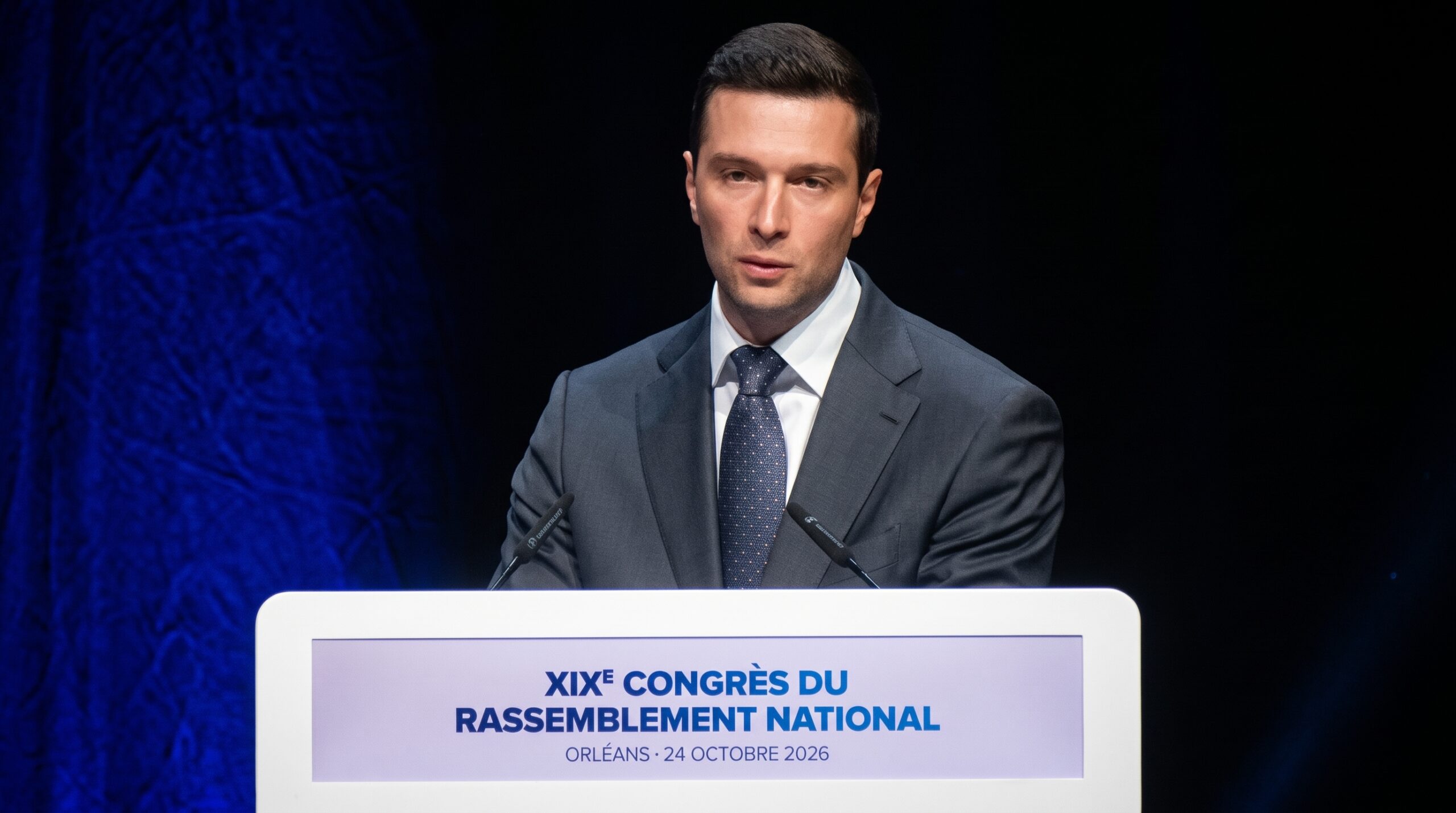

On Saturday, October 24, 2026, Jordan Bardella was confirmed as president of the National Rally during the party's 11th congress. This re-election comes in a tense political context, on the eve of an election campaign where the stakes are crucial.
As the French political landscape is undergoing significant changes, Bardella will have to face major challenges. How to navigate such a competitive environment? Voter expectations are high. They are seeking clear answers on sensitive issues such as the economic situation, security, and immigration.
The pressure is on his shoulders. This new era for the National Rally could redefine not only the future of the party but also that of French politics. It remains to be seen how Bardella will rise to these challenges and mobilize his electorate.
The context of the 11th Congress of the National Rally
The evolution of the party since its creation
The National Rally (RN), formerly known as the National Front, has undergone a major transformation since its creation in 1972. Over the years, the party has managed to evolve to attract a wider audience. Jordan Bardella, who has become president, embodies this evolution.
Here are some key milestones in this evolution:
- Reorientation towards economic and social themes.
- Modernization of the party's image.
- Opening up to new voters, particularly the youth.
These changes have allowed the RN to position itself as an essential force in the French political landscape.
The current political challenges
As the presidential election approaches, several challenges loom for the National Rally. Among them:
- The need to strengthen its electoral base.
- The management of internal and external tensions.
- The fight against the rise of the far right in Europe.
Jordan Bardella must navigate this complex context. His strategy will be crucial for the success of the RN in the upcoming elections.
Jordan Bardella, a popular president
His journey within the National Rally
Jordan Bardella has **marked** the history of the National Rally (RN) since his arrival. A young politician, he quickly managed to **make a name for himself**. At just 27 years old, he became the youngest president of the party.
Before being elected, Bardella held key positions:
- Member of the European Parliament since 2019
- Vice-president of the RN
- Head of the party's communication
His **commitment** to the ideas of the RN has allowed him to establish himself as a rising figure. His **ability** to gather and mobilize the troops was decisive in his appointment.
The challenges to address for his new term
With his **reelection**, Jordan Bardella faces several challenges. France is at a political turning point. The upcoming elections are set to be **crucial** for the RN.
Among the major challenges:
- Maintaining party unity in the face of **internal divisions**.
- Attracting new voters, particularly **young people**.
- Meeting the expectations of his electorate regarding **security** and **immigration**.
The **pressure** is high. Bardella will have to prove that he can **lead** effectively in this tense context. His ability to navigate these challenges will be essential for the future of the National Rally.
The consequences of his reelection on the party
Relations with the Le Pen clan
The reelection of Jordan Bardella as president of the National Rally could have significant repercussions on relationships within the party. Bardella, younger and more dynamic, may attempt to redefine the relationships with the Le Pen clan, particularly with Marine Le Pen.
Here are some key points to consider:
- A desire for the renewal of ideas.
- A rapprochement or distancing from the party's traditions.
- Possible tensions over strategic choices.
It is crucial to monitor how these relationships evolve. The stakes of power and influence are always present.
The impact on electoral strategy
Bardella's reelection could also influence the electoral strategy of the National Rally. With a campaign on the horizon, several elements need to be considered:
- An adaptation to the new concerns of voters.
- A possible emphasis on themes such as immigration and security.
- A strengthened use of social media to mobilize young voters.
These changes could redefine the party's priorities while seeking to capture an increasingly diverse electorate.
A campaign under high tension
Political opponents to watch
With the reelection of Jordan Bardella, the political climate is intensifying. Several opponents present themselves as serious threats to the National Rally. Among them are:
- La France Insoumise, with Jean-Luc Mélenchon, who mobilizes a united left electorate.
- The Republicans, who are trying to regain the upper hand on the right with a new candidate.
- The Socialist Party, which seeks to revitalize its base after difficult years.
These parties will attempt to capture the attention of voters, making the campaign particularly competitive.
Voter expectations
Voters have clear expectations. They are looking for answers to their concerns, particularly:
- Security: The French want to feel protected.
- The economy: The economic crisis raises concerns about employment and purchasing power.
- Immigration: A sensitive topic, with diverging opinions on managing migration flows.
Jordan Bardella must address these expectations to mobilize his electorate and attract new supporters. Clear and effective communication will be essential.
Post-Congress reactions and analyses
Opinions of political experts
The Congress of the National Rally has provoked numerous reactions among political experts. Some emphasize the importance of confirming Jordan Bardella as president. This decision could strengthen the cohesion within the party on the eve of a crucial electoral campaign.
Other experts express reservations. They fear that the party may not be able to gather a broad support against its opponents. Here are some key points raised by analysts:
- Risks of increased polarization of political debate.
- The necessity of a clear and mobilizing message.
- Possible internal tensions related to ideological divergences.
Comments from party members
Within the National Rally, reactions are generally positive. Many members express their confidence in Jordan Bardella. They appreciate his dynamism and his ability to mobilize the troops. Here are some testimonies collected:
- “Bardella embodies the renewal we need.”
- “His energy could be a major asset for the campaign.”
- “We must now unite our forces to move forward.”
However, some members voice concerns. They fear that the current political climate may lead to divisions within the party. The challenge will be to maintain a clear line while remaining accessible to voters.
The future of the National Rally
Aspirations for the Élysée
Jordan Bardella, as the new president of the National Rally, has clear ambitions for the Élysée. His goal is to mobilize voters around key themes:
- Immigration: Strengthening controls and reducing the number of immigrants.
- Security: Increasing budgets for the police and military.
- Economy: Promoting protectionism and supporting French businesses.
Bardella also aims to gather support within the French right. He may ally with other parties to create a united front. This could give him additional weight in the upcoming elections.
Long-term perspectives
The prospects for the National Rally are both promising and uncertain. In the coming years, several factors will play a crucial role:
- Evolution of mindsets: French society is changing. Bardella's ideas must resonate with the aspirations of young voters.
- Economic context: An economic crisis could favor parties like the National Rally.
- Political competition: The rise of other far-right or moderate right parties may complicate the situation.
The path to the Élysée is fraught with pitfalls, but Bardella seems ready to take on the challenge. The future of the National Rally will depend on his ability to adapt and assert itself in the French political landscape.


