




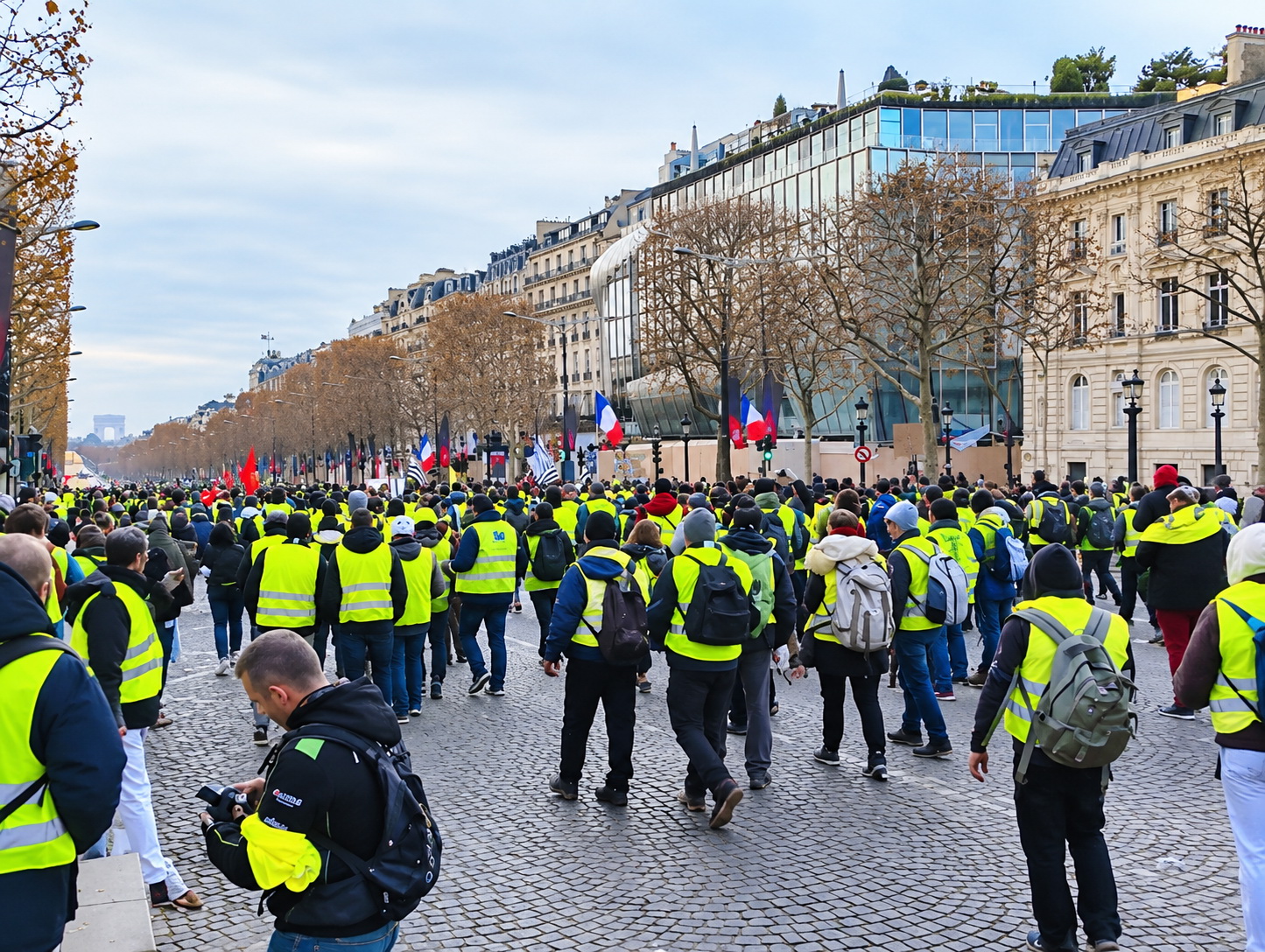

On October 24, 2026, France is preparing for an exceptional day. In a context of growing discontent, the Yellow Vests, trade unions, and students are coming together to defend two critical issues: purchasing power and public services.
This massive mobilization is not just a simple protest. It reflects a clear desire to make the voices of citizens heard in the face of rising living costs and the deterioration of essential services. The French are determined to fight for their rights and their future.
However, this mobilization will take place under high security, a decision by the government that reflects the tensions of previous demonstrations. Participants nonetheless hope that their message will be received and that it can provoke significant change.
Context of the Mobilization in France in 2026
The mobilization on October 24, 2026 takes place against a backdrop of increasing social tensions. The Yellow Vests, trade unions, and students are gathering to express their discontent over the rising cost of living. This movement has become emblematic of the struggle for purchasing power and the defense of public services.
For several years, the French have been feeling economic pressure. Wages have stagnated, while the prices of goods and services continue to rise. In this context, the mobilization on October 24 aims to be a call for unity and resistance.
Reasons for the Mobilization
- Price Increase: The prices of energy and food have risen sharply, impacting household budgets.
- Reform of Public Services: Budget cuts in public services raise concerns among citizens.
- Growing Inequalities: Social divides are widening, and many citizens feel left behind.
The protests planned for that day aim to bring together different sectors of society. The Yellow Vests, well known for their determination, are joined by trade unions and students. Together, they hope to make their voices heard.
A Strengthened Security Framework
For this mobilization, the government has implemented a strengthened security system. This choice results from past events, where demonstrations had escalated. Hence, police presence will be significant to ensure the safety of all participants.
This mobilization, despite being under high security, represents a key moment for the expression of citizens' demands. It illustrates the French people's determination to fight for their rights and their future.
Main Actors of the Mobilization
The mobilization on October 24, 2026, in France gathered several key groups. Each has its own demands, but they share a common goal: to defend purchasing power and public services.
The Yellow Vests
The Yellow Vests are a popular movement fighting against economic inequalities. Their mobilization is often marked by demonstrations. They demand:
- An increase in wages
- A reduction in taxes on essential goods
- A better consideration of citizens' needs
The Trade Unions
Trade unions are organizations representing workers. They have played a crucial role in organizing demonstrations. Their demands include:
- Decent working conditions
- Protection of workers' rights
- Adequate funding for public services
The Students
Students often join mobilizations to advocate for better access to education. Their concerns include:
- Affordable tuition fees
- Increased support for scholarships
- Quality university infrastructure
These three groups, although different, unite their forces to make their voices heard. The mobilization in 2026 is an example of solidarity across generations and professional sectors.
Demands of the Protesters
On Saturday, October 24, 2026, the Yellow Vests, trade unions, and students come together to make their voices heard. Their massive mobilization revolves around several essential demands.
1. Defense of Purchasing Power
The protesters express major concerns regarding purchasing power. Here are some key points:
- Increase in wages to cope with inflation.
- Reduction of taxes on essential goods.
- Control of prices for basic services, such as energy and housing.
These demands aim to improve citizens' quality of life and reduce economic inequalities.
2. Support for Public Services
The defense of public services is also at the heart of concerns. The protesters demand:
- Maintaining access to health and education.
- Investments in public transportation.
- Better care for the elderly and people with disabilities.
These demands aim to ensure equitable access to essential services for all.
3. Fight Against Social Inequalities
Finally, the protesters seek strong action against social inequalities. They demand:
- Fairer tax policies.
- Improved working conditions.
- An effective fight against precariousness and unemployment.
These demands highlight the importance of a more equitable and supportive society.
Course of the Demonstration Day
On Saturday, October 24, 2026, France experienced a massive mobilization uniting the Yellow Vests, trade unions, and students. This demonstration day was marked by an exceptional security deployment in major cities.
Rallying Points
The protesters gathered at several key locations:
- Place de la République in Paris
- Place Bellecour in Lyon
- Place du Capitole in Toulouse
- Esplanade de la Défense in Nanterre
These symbolic locations were chosen for their visibility and accessibility. Participants began arriving early in the morning, creating an atmosphere of brotherhood and dynamism.
Route of the Protesters
After the opening speeches, the protesters took to the streets. The route was carefully organized to avoid sensitive areas. Here are some key elements of the journey:
- Banners and slogans accompanied each stage.
- The organizers ensured that the message remained clear: defend purchasing power and public services.
- Volunteer teams distributed water and snacks to participants.
The day was punctuated by speeches from union and student leaders, who emphasized the importance of unity in the face of economic challenges.
Enhanced Security
With a strong police presence, the security system was reinforced to ensure the smooth conduct of the day. Law enforcement was mobilized to:
- Ensure the safety of protesters.
- Prevent excesses.
- Facilitate the passage of processions.
This vigilance allowed for a peaceful atmosphere throughout the day. Protesters were able to express their demands without major incidents.
Safety and Government Measures
On Saturday, October 24, 2026, France is preparing for a massive mobilization that attracts the attention not only of the protesters but also of the authorities. Indeed, security is a top priority for the government in the face of the risks of riots and excesses.
Strengthening Security Measures
To ensure the calm of the demonstrations, several measures have been implemented:
- Deployment of a significant number of police forces, including specialized units.
- Identity checks at strategic gathering points.
- Drone surveillance to monitor crowd movements.
These measures aim to prevent excesses and protect peaceful participants. The government thus wishes to show that it takes citizens' concerns seriously while maintaining public order.
Reactions from Protesters
The protesters, comprising Yellow Vests, trade unions, and students, express mixed feelings about this security presence:
- Some believe it creates an atmosphere of distrust.
- Others argue that security is necessary to ensure their protection.
This debate about security highlights the complexity of the current situation in France. On one side, there is the need to protect the right to protest, and on the other, the necessity to maintain public order.
Impact on Purchasing Power and Public Services
The mobilization on October 24, 2026, aims to defend the purchasing power of the French and preserve public services. These two issues are closely linked and affect the daily lives of millions of citizens.
Purchasing Power in Crisis
The purchasing power of the French has been severely tested in recent years. Several factors explain this situation:
- Increase in prices of consumer goods.
- Surge in energy costs.
- Inflation eroding wages.
The Yellow Vests, trade unions, and students denounce this decline in purchasing power. They demand concrete measures to improve the situation. Among the primary demands are:
- Increase in wages.
- Reduction of VAT on essential goods.
- Freezing the prices of public services.
Public Services Under Pressure
Public services are also in danger. The demonstrations aim to alert about their degradation. Several points should be highlighted:
- Closure of post offices and schools.
- Reduction in budgets allocated to health and education.
- Limited access to public transportation.
The protesters wish to remind everyone of the importance of public services for social cohesion. They believe that these services should be strengthened, not weakened. The mobilizations of October 24, 2026, aim to make this voice heard.
What Perspectives for the Future?
The mobilization on October 24, 2026, highlighted several crucial issues for the future of France. The **Yellow Vests**, **trade unions**, and **students** have united their forces to defend **purchasing power** and **public services**. But what will be the long-term consequences?
Strengthening Social Movements
Recent events could lead to a **strengthening** of social movements. Here are some avenues to consider:
- Increased solidarity among different categories of protesters.
- Regular mobilization to maintain pressure on the government.
- Creation of new collectives to address specific issues.
Impact on Government Policy
The government's response to this mobilization will be crucial. Several scenarios are possible:
- Economic reforms to improve purchasing power.
- Social dialogues with trade unions to ease tensions.
- Strengthening of public services to meet citizens' expectations.
Evolution of Mindsets
This mobilization could also lead to a change in mindsets. Citizens may become more aware of the importance of:
- Participating in political life by voting and engaging.
- Holding elected officials accountable for their actions.
- Valuing public services as an essential common good.
In summary, the mobilization on October 24, 2026, is a strong signal. It demonstrates that France is ready to fight for its values. The future will depend on how political and social actors respond to these challenges.


