




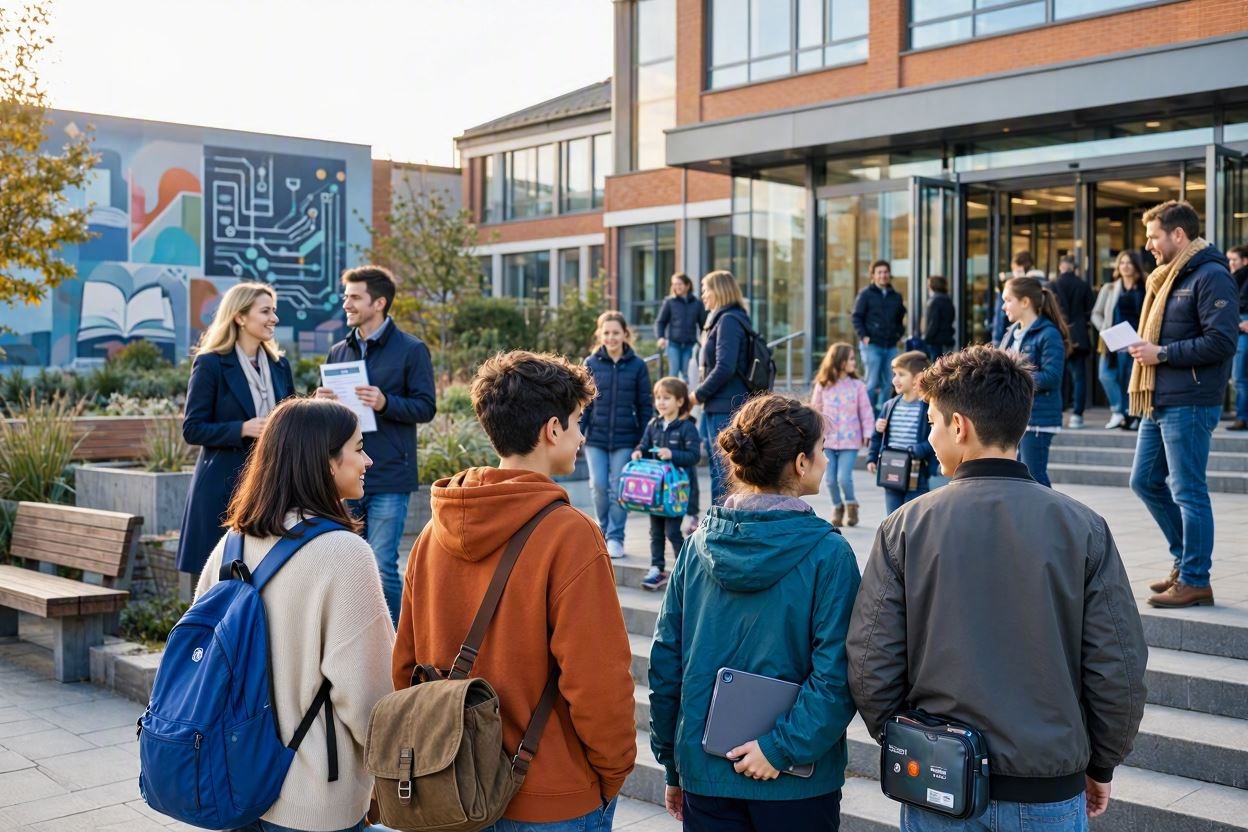

The start of the school year on September 1, 2026, is shaping up to be a turning point for the French educational system. As students return to school, a new measure is making headlines: the ban on mobile phones in high schools. This decision was at the heart of discussions during Emmanuel Macron’s visit to the Chaptal high school in Mende. Why such a ban? What are the impacts on young people?
Beyond simple rules, a real debate on concentration and social relationships is emerging. Students, like teachers, have varied opinions. This school year promises to be rich in discussions and reflections on the education of tomorrow.
Context of the 2026 School Year
Importance of Back to School
The start of the school year is a crucial moment for students, parents, and teachers. It marks the beginning of a new school year. For many, it is an opportunity to meet new people and learn new things.
This year, on September 1, 2026, the return to school takes place in a particular context. The government has highlighted measures aimed at improving student concentration. The ban on mobile phones in high schools is a strong example of this.
Current State of Schools in Lozère
Schools in Lozère face specific challenges. The region, while beautiful, sometimes suffers from a lack of resources. Here are some key points:
- Infrastructure needing modernization in several establishments.
- Lack of teaching staff in certain subjects.
- Educational projects underway to energize learning.
The Chaptal high school in Mende, where Emmanuel Macron spoke, represents a model for other establishments. It emphasizes pedagogical innovation and student engagement.
Emmanuel Macron’s Visit to Chaptal High School in Mende
Objectives of the Presidential Visit
President Emmanuel Macron chose Chaptal High School in Mende to discuss the importance of education and the 2026 school year. During this visit, several key objectives were established:
- Promote the ban on mobile phones in high schools.
- Raise awareness among students about the impact of screens on concentration.
- Engage with teachers on current educational challenges.
Students’ Reactions Before the Visit
As Emmanuel Macron’s visit approaches, the students of Chaptal High School expressed mixed feelings. Here are some of their reactions:
- Some students are excited about the opportunity to meet the president.
- Others fear that the ban on phones will complicate their daily lives.
- Finally, several students wish to understand the reasons behind this decision.
These reactions highlight the importance of the topic and the need for open dialogue between the president and the youth. The start of the school year is thus expected to be rich in exchanges and reflections.
The Ban on Mobile Phones in High Schools
Reasons Behind This Decision
President Emmanuel Macron highlighted several reasons to justify the ban on mobile phones in high schools. Here are the main ones:
- Concentration: Phones can distract students during classes.
- Social Relationships: Interactions between students are often replaced by digital exchanges.
- Prevention of Bullying: Limiting phone use can help reduce cases of cyberbullying.
These reasons aim to create a healthier and more productive learning environment.
Expected Impact on Students
The ban on mobile phones could have several positive impacts on students:
- Improvement in Academic Results: Fewer distractions could lead to better concentration.
- Strengthening Social Bonds: Students may spend more time interacting face-to-face.
- Development of Autonomy: Students will learn to manage their time without relying on their phones.
These changes aim to promote a calmer school climate and encourage more responsible behaviors among young people.
Reactions from Students and Teachers
Mixed Opinions Among High School Students
The decision to ban mobile phones in high schools has sparked varied reactions among students. Some welcome this measure with enthusiasm, believing it will allow for better concentration in class. Others, however, express reservations.
Here are some students’ viewpoints:
- Pro: Fewer distractions, more social interactions.
- Con: Difficulty in staying in touch with parents.
- Neutral: Indifferent, preferring to focus on their studies.
Teachers’ Perspectives on This Ban
Teachers also have diverse opinions on the ban on mobile phones. For some, this measure is a necessary tool to improve the quality of learning.
Here are the arguments put forward by teachers:
- Improved Attention: Students are more attentive without their phones.
- Reduction of Bullying: Fewer possibilities for cyberbullying.
- Increased Concentration: Fosters a better working atmosphere in class.
Despite this, some teachers fear that this ban may create tensions between students and the administration. The discussion remains open.
Consequences on Students’ Daily Lives
Changes in School Life
With the ban on mobile phones in high schools, several changes will affect students’ school life. This measure aims to reduce distractions in class and promote concentration. Here are some notable impacts:
- Improved Attention: Students will be less tempted to check their social media during classes.
- Enhanced Interactions: Exchanges among students will become more frequent without screens present.
- Reduction of Cyberbullying: Fewer opportunities for intimidation through phones.
These changes could lead to a healthier school environment conducive to learning. Teachers may also notice better participation in class.
Possible Adaptations by Students
For high school students, adapting to this new rule will require some effort. Here are possible strategies:
- Use of Alternatives: Encourage the use of notebooks or tablets for taking notes.
- Planning: Organize specific times to check messages outside of class hours.
- Creation of Study Groups: Promote group work to strengthen peer support.
This adaptation will require commitment from the students, but it can also enhance their autonomy and sense of responsibility.
Conclusion and Future Perspectives
Assessment of the 2026 School Year
The school year of September 2026 has been marked by many changes. The ban on mobile phones in high schools has sparked lively debate. Students, teachers, and parents have expressed varied opinions on this measure.
Initial feedback shows that:
- Students are concentrating more in class.
- Social interactions among students have intensified.
- Concerns persist regarding access to information.
President Emmanuel Macron emphasized the importance of this decision during his visit to Chaptal High School in Mende, stating that it aims to improve the learning environment.
Possible Evolutions in the Educational System
In the future, several evolutions could emerge in the French educational system:
- A deeper integration of digital tools in learning.
- Training for teachers on the use of technology.
- A continuous dialogue among stakeholders to adapt the rules.
These changes could shape a new approach to education, centered on the well-being of students and their academic success. The debate on the use of mobile phones is far from over, and it will be essential to monitor its evolution in the coming months.


