




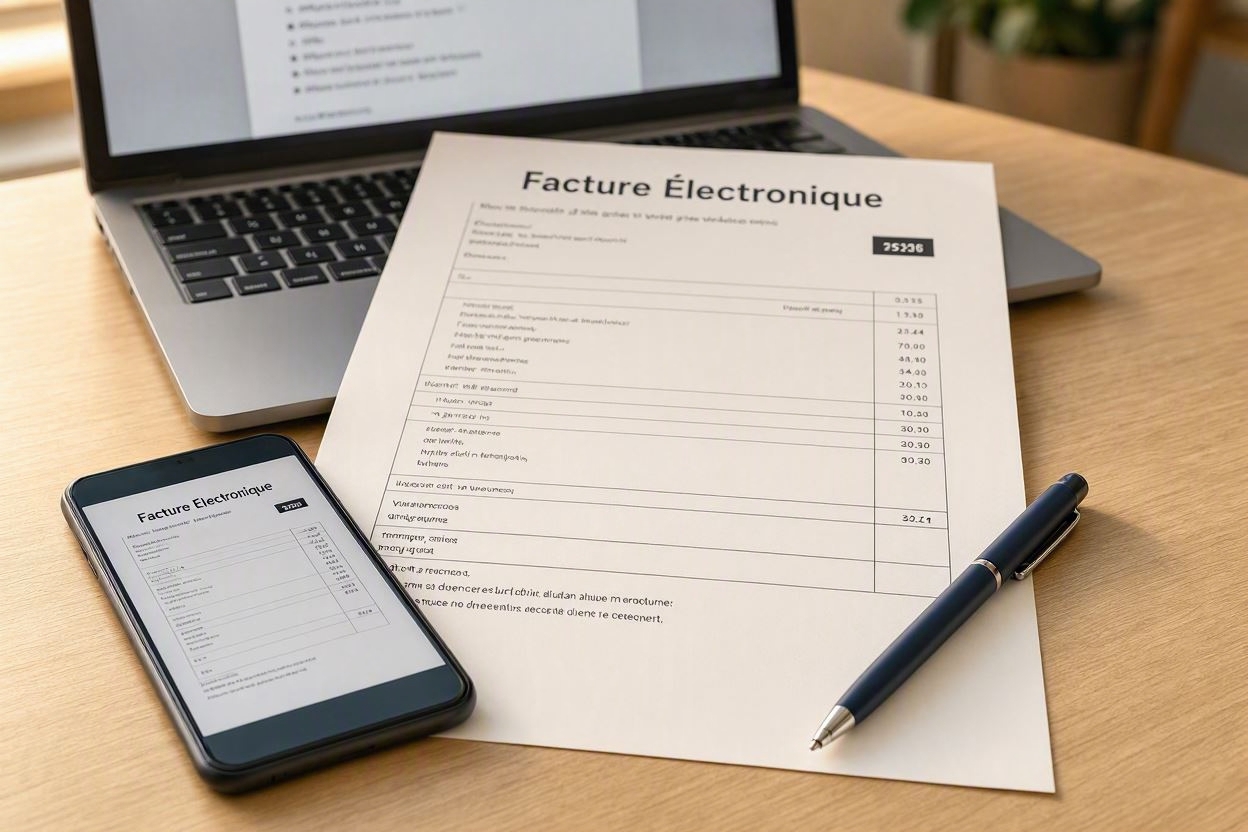

Starting from September 1, 2026, all companies subject to VAT will be required to adopt electronic invoicing. This obligation marks a significant turning point for administrative and tax management. Why wait? The transition to digital is an opportunity to optimize your processes.
In this article, we will explore in detail what this means for your business. From understanding the differences between paper and electronic invoices to the key implementation steps, you will discover everything you need to know to be ready for this deadline.
Stay with us to understand how this reform can transform your financial management and help you avoid penalties.
Understanding Electronic Invoicing
What is Electronic Invoicing?
Electronic invoicing refers to the issuance, receipt, and processing of invoices in digital format. Unlike paper invoices, they are created, sent, and archived using computer systems.
This process simplifies the financial management of businesses. Electronic invoices are typically in PDF format, but they can also be integrated into larger management systems.
Differences Between Paper and Electronic Invoicing
There are several key differences between paper and electronic invoicing:
- Costs: Electronic invoicing reduces printing and mailing costs.
- Speed: Electronic invoices are sent in seconds, while paper invoices can take several days.
- Archiving: Electronic invoices are easier to archive and retrieve thanks to digital tools.
- Environmental Impact: Reducing paper usage contributes to environmental protection.
In summary, the transition to electronic invoicing offers many benefits to businesses, both economically and environmentally.
Implementation Timeline
Key Steps Until September 1, 2026
The implementation of electronic invoices is a process that requires good preparation. Here are the key steps to follow:
- 2024: Official announcement of the obligation for all businesses subject to VAT.
- 2025: Testing phase and adaptation of invoicing systems.
- Early 2026: Training of teams and updating of internal processes.
- September 2026: Entry into force of the obligation.
What are the Deadlines for Businesses?
Each business must prepare for this transition. Here are some important deadlines:
Businesses must:
- Assess their current invoicing system.
- Choose suitable software for electronic invoicing.
- Train staff on new procedures.
- Test new systems before the deadline.
These steps will allow businesses to comply with the new regulations and avoid penalties.
Scope of the Reform
Who is Affected by the Electronic Invoicing Obligation?
The obligation of electronic invoicing applies to all businesses subject to VAT. This includes:
- Sole proprietorships
- Commercial companies
- Professional services
- Associations subject to VAT
These businesses will need to issue electronic invoices for all their transactions. This aims to simplify accounting management and reduce tax fraud.
Possible Exemptions and Special Cases
Although the rule is general, some exemptions may apply:
- Very small businesses with revenue below a specific threshold
- Public organizations that have specific invoicing rules
- Transactions between individuals
It is essential for each business to check its status and inquire about potential exemptions to comply with current legislation.
New Mandatory Information on Invoices
What Information Must Be Included on Electronic Invoices?
As of September 1, 2026, electronic invoices must include specific mentions. Here are the essential pieces of information:
- Identity of the issuer: Name, address, and VAT number.
- Identity of the customer: Name, address, and VAT number.
- Date of issuance: The date when the invoice is issued.
- Description of goods or services: Clear details of the products/services provided.
- Total amount: Amount to be paid, including VAT.
- Payment terms: Deadline and payment methods.
This information ensures the transparency and compliance of transactions.
The Consequences of Non-Compliance
Failing to meet these new obligations can result in penalties. Here are some examples of consequences:
- Financial fines: Penalties may be applied.
- Refusal of VAT deduction: Businesses may lose their right to recover VAT.
- Increased tax audits: Non-compliant businesses may be subject to more scrutiny.
Therefore, it is crucial to adapt to these requirements to avoid financial and administrative inconveniences.
The Advantages of Electronic Invoicing
Improvement of Productivity and Management
Electronic invoicing offers numerous advantages for businesses. Firstly, it allows for the automation of processes. Repetitive tasks, such as sending invoices, are simplified. This reduces the time spent on administrative management.
Here are some key benefits:
- Reduction of errors: Less manual entry means fewer mistakes.
- Quick processing: Invoices are sent and received instantly.
- Easy tracking: Invoices can be tracked in real time.
In summary, electronic invoicing transforms the financial management of businesses, making the process smoother and more efficient.
Security and Document Preservation
Another major advantage of electronic invoicing is the security of documents. Electronic invoices are typically stored on secure servers, reducing the risk of loss or damage. Here are some points to consider:
- Simplified archiving: Documents are easily accessible online.
- Data protection: Encryption systems protect sensitive information.
- Legal compliance: Electronic invoices comply with existing standards.
In summary, electronic invoicing ensures a secure and reliable preservation of documents, which is essential for any business.
Preparing Your Business for the Transition
Available Technical Solutions
To comply with the obligation of electronic invoices, it is crucial to explore the various technical solutions available. Here are some options:
- Invoicing software: Many software programs allow for easy generation and transmission of electronic invoices.
- Dedicated platforms: Some online platforms offer comprehensive services for issuing and managing electronic invoices.
- APIs: Application programming interfaces (APIs) can integrate electronic invoicing directly into your existing system.
Choose a solution that fits the specific needs of your business. Also, check compatibility with current standards.
Support and Useful Resources
The transition to electronic invoices can seem complex. To facilitate this process, several resources are available:
- Online training: Many institutions offer training to understand the challenges of electronic invoicing.
- Specialized consultants: Hiring a consultant can help you implement the most suitable system.
- Practical guides: Online guides outline the steps to follow for a successful transition.
Don’t wait until the last minute to prepare. Adequate support will allow you to meet the September 1, 2026 deadline without stress.


