




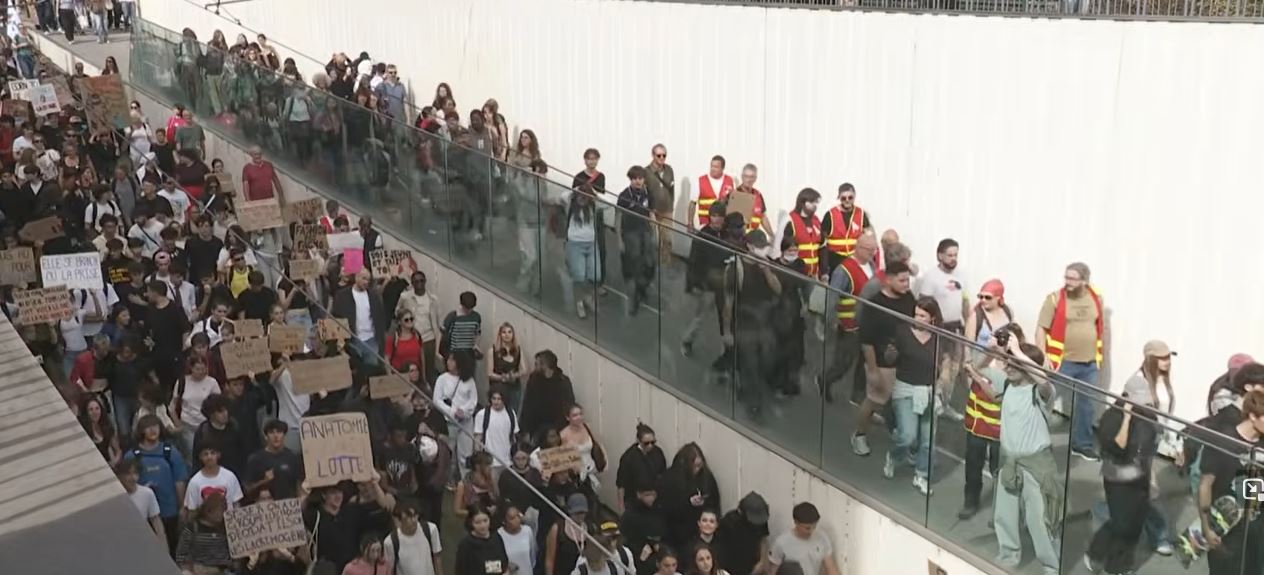

On Wednesday, October 14, 2026, a wave of protesters surged in front of the Ministry of Education. They are demanding the resignation of the government and increased support for students. This mobilization reflects a growing anger towards educational policies deemed insufficient.
As slogans resonate and signs are raised, students, teachers, and parents gather to make their voices heard. Their message is clear: they want quality education and improved study conditions. But what are the reasons behind this mobilization? What demands are at the heart of the speeches?
Let’s delve into the heart of this demonstration that could well mark a turning point in the history of education in France.
Context of the Mobilization
History of High School Protests
High school protests are not a new phenomenon. They have existed for decades. Each generation has its reasons to rise up. Students fight for their rights, for a quality education, and for a better future.
In France, several movements have marked history, such as the events of May 68. That year, young people demanded reforms in the education system. Since then, other mobilizations have taken place:
- 2005: Protests against the Equal Opportunities Law.
- 2016: The “Nuit debout” movement to defend the rights of workers and students.
- 2020: Mobilization against the reform of scholarships.
These mobilizations show the willingness of young people to express themselves and defend their rights. Today, a new wave of protests is emerging.
Students’ Demands
Students are gathering to express important concerns. Among their demands are:
- Increased funding for education.
- Improvement of study conditions in schools.
- Easier access to scholarships and financial aid.
- Enhanced psychological support for students.
These points are crucial to ensuring a healthy and equitable educational environment. During the protest on October 14, 2026, these demands were at the heart of the slogans and signs.
The Events of October 14, 2026
The Course of the Protest
On Wednesday, October 14, 2026, hundreds of protesters gathered in front of the Ministry of Education. The main objective was to demand the resignation of the current government. Students, teachers, and parents expressed their dissatisfaction with current educational policies.
The protest began at 10 AM. Participants held signs with strong messages such as:
- “For a Quality Education”
- “Resign, Government”
- “Support for Students”
The organizers scheduled speeches from student leaders and teachers. The tone was both assertive and supportive. Protesters chanted slogans throughout the day, reinforcing their unity and determination.
Authorities’ Reactions
In response to this mobilization, authorities reacted quickly. The Minister of Education stated: “We hear the concerns of the protesters”. However, he defended the ongoing reforms, asserting that they were necessary to modernize the education system.
Meanwhile, the police monitored the protest to ensure safety. No major incidents were reported, allowing for a peaceful unfolding of the event. However, some political representatives criticized the mobilization, calling it a “opportunistic movement”.
The Reasons for the Call for the Government’s Resignation
Failures in the National Education System
Protesters denounce serious failures in the education system. Several points are raised:
- Insufficient resources for schools.
- Obsolete programs that no longer meet students’ needs.
- Difficult working conditions for teachers, leading to burnout.
These factors directly affect the quality of education, making the situation unbearable for those involved in the system.
The Impact on Students
The consequences of these failures weigh heavily on students. Here are a few:
- Decreased motivation among students, faced with a system that does not support them.
- Increased school failure, with declining success rates.
- Growing inequalities between schools, depending on their location and resources.
Students feel abandoned and demand urgent measures to improve their situation. They seek increased support from the government for their studies.
The Government’s Responses
Announced Measures
In the face of the **mobilization** of protesters, the government responded by presenting several **measures**. These initiatives aim to ease tensions and address the **concerns** of students. Among the main announcements are:
- Increased funding for student scholarships.
- Creation of new support structures for struggling students.
- Improvement of learning conditions in schools.
These measures are seen as a first step towards a **broader reform**, although their effectiveness remains to be proven.
Critiques and Support
Despite these announcements, many voices are rising to criticize the government. Protesters believe these measures are insufficient. They demand a **radical change** in educational policies. Here are some of the criticisms raised:
- The **funding** does not meet the real needs of students.
- The new support structures are deemed **too limited**.
- Improvements in learning conditions are often **symbolic**.
However, several student associations express their support for the announced measures, considering it a **promising start**. They hope this will open the door to deeper discussions about the future of education in France.
Impact on Students and the Future of Education
Consequences on Academic Pathways
The protest movement has direct repercussions on students’ academic pathways. Concerns are many:
- Decreased resources: Budgets allocated to education are at risk.
- Instability: Strikes and protests disrupt the school calendar.
- Increased stress: Students feel intense pressure due to uncertainty.
These elements can affect not only academic results but also student motivation. Increased support is essential to help students overcome these challenges.
Reactions from Parents and Teachers
Parents and teachers express their solidarity with students. Discussions are lively in homes and schools. Here are some key reactions:
- Parents worry about their children’s future.
- Teachers demand concrete solutions to improve the situation.
- A call for general mobilization to support students is heard.
This dynamic shows that education is a collective issue. Everyone has a role to play in ensuring a better future for the next generations.
Conclusion and Perspectives
What Next for the Movement?
The protest on October 14, 2026, highlighted the **demands** of students and teachers. Participants are calling for a **deep reform** of the education system. This raises questions about the future of the movement. What will be the next steps?
It is crucial to maintain the **mobilization**. Organizers have announced several upcoming actions:
- Regular meetings to discuss progress.
- Awareness-raising actions in other cities.
- A follow-up on the promises made by the government.
The **persistence** of the movement is essential to make students’ voices heard. The coming weeks will be decisive.
Call for Unity and Solidarity
In the face of these **challenges**, a call for unity is made. Students, teachers, and parents must come together. Solidarity is more important than ever. Together, they can exert pressure on the government.
Here are some concrete actions to strengthen this solidarity:
- Participate in general assemblies.
- Share testimonials on social media.
- Organize fundraising to support struggling students.
It is time to show that the **educational community** is united. Every voice matters in this fight for a better future.


