




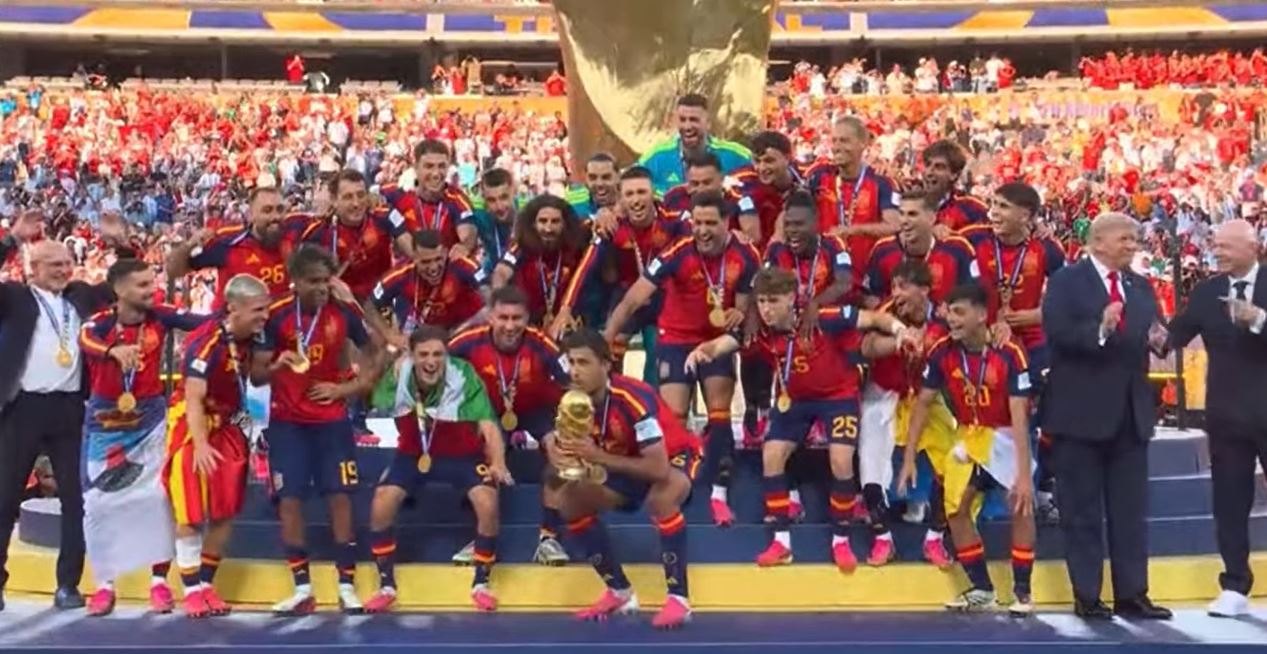

July 20, 2026, will forever be etched in football history. On that day, Spain achieved a remarkable feat by defeating Argentina in the FIFA World Cup Final, securing a 1–0 victory. This historic triumph was more than just a championship title—it was a testament to the determination, resilience, and talent of a team that rose to the occasion on the world’s biggest stage.
As Spain celebrated its second World Cup title, supporters across the nation were filled with pride. The players delivered an outstanding performance, combining technical excellence with tactical discipline to overcome a formidable opponent. Argentina, despite creating opportunities and fighting until the final whistle, was unable to find the breakthrough, allowing Spain to savor a truly historic moment.
In this article, we will revisit the key moments of this epic match, analyze the players’ performances, and explore the impact of this victory on Spanish football. Get ready to relive an unforgettable final that will be remembered for generations to come.
A Historic Match: Spain vs. Argentina
July 20, 2026, will remain forever etched in the memories of football fans. Spain achieved an incredible feat by defeating Argentina 1–0 in the FIFA World Cup Final. This historic match secured Spain’s second World Cup title and cemented its place among football’s elite nations.
Both teams entered the final determined to lift the trophy. Spain, renowned for its possession-based style and precise passing, ultimately proved the difference. Argentina displayed remarkable defensive resilience but was unable to capitalize on its scoring opportunities.
Some of the key moments of the match included:
- A closely contested first half, with both sides creating several chances.
- A decisive goal scored by Spain in the 106th minute of extra time.
- A disciplined Spanish defense that successfully withstood Argentina’s attacking pressure.
This victory was not only a triumph for Spain but also a showcase of the team’s tactical intelligence, composure, and determination. The players remained focused until the final whistle, demonstrating their unwavering commitment to winning the world title.
Key Moments of the Final
The Decisive Goal
The World Cup Final between Spain and Argentina was filled with tension and emotion. The match’s only goal was scored by Spanish forward Ferran Torres in the 106th minute of extra time. That decisive moment changed the course of the game and ultimately secured Spain’s place at the top of world football.

Ferran Torres secured victory for Spain by finding the back of the net during extra time.
Here are some of the match’s most memorable highlights:
- The goal came from a superb midfield assist that unlocked the Argentine defense.
- The Argentine goalkeeper was caught off guard by the speed of the move.
- The strike sparked scenes of jubilation among Spanish supporters both in the stadium and across the country.
Player Performances
Players from both sides delivered performances of the highest quality, but a few individuals stood out in particular:
- The Spanish goalkeeper made several crucial saves to preserve his team’s lead.
- Spain’s midfield controlled the tempo of the game, distributing accurate passes and maintaining possession.
- On the Argentine side, the star forward led multiple attacking moves but was unable to convert his chances.
These performances proved decisive in determining the outcome of the match. Spain remained disciplined in defense while showing efficiency in attack. This combination of talent, organization, and tactical execution enabled the team to secure its second World Cup title.
Analysis of Spain’s Strategy
During the World Cup Final, Spain showcased a highly effective and well-structured game plan. Several key elements allowed them to gain the upper hand over Argentina.
First and foremost, Spain relied on a strong collective approach. The players demonstrated excellent coordination, maintaining possession and creating opportunities with fluid movement throughout the match. Key aspects of their strategy included:
- High pressing: Spain applied pressure to the Argentine defense from the opening stages of the game.
- Midfield control: The Spanish midfielders won possession frequently and dictated the pace of play.
- Short, precise passing: Quick passing sequences helped disrupt Argentina’s defensive organization.
Another crucial factor was Spain’s tactical flexibility. The team adapted effectively to Argentina’s adjustments during the match. Whenever Argentina increased its attacking intensity, Spain’s defense remained compact and well-positioned to neutralize the threat.
Finally, team spirit played a decisive role. The players consistently supported one another, creating an atmosphere of confidence and unity. This collective mindset allowed Spain to remain focused and composed under pressure.
In the end, Spain’s victory was the result of careful planning, disciplined execution, and exceptional teamwork.
Reactions After the Victory
Celebrations in Spain
Spain’s triumph sparked celebrations across the entire country. As soon as the final whistle blew, the streets of major cities filled with jubilant supporters. Millions of fans shared in the joy of the historic achievement.
Among the celebrations:
- Fireworks lit up the skies above Madrid, Barcelona, and Valencia.
- Songs and dances echoed through public squares nationwide.
- The players received a hero’s welcome upon their return, creating an unforgettable festive atmosphere.
Social media was also flooded with messages of congratulations and national pride. Hashtags such as #VivaEspaña and #Campeones quickly began trending as supporters celebrated the team’s success.
Reactions in Argentina
In Argentina, the defeat was understandably difficult to accept. Supporters and players alike expressed their disappointment following the final.
Reactions included:
- Discussions about the team’s performance, with many calling for reflection on key moments and missed opportunities.
- Players pledging to return stronger in future competitions.
- Messages of encouragement emphasizing the importance of unity and resilience.
Despite the loss, Argentina remained proud of its journey throughout the tournament. The nation’s supporters continued to stand behind their team, recognizing the determination and commitment shown on the road to the World Cup Final.

Lionel Messi Congratulates the Spanish National Team
The Impact of This Victory on the Development of Spanish Football
Spain’s victory over Argentina in the 2026 FIFA World Cup Final represents a defining moment for Spanish football. Beyond the immense sense of national pride it generated, this success is likely to have far-reaching effects on the future of the sport throughout the country.
Several key areas are expected to benefit from this achievement:
- Enhanced international reputation: Winning a World Cup further elevates the status of Spanish football on the global stage.
- Attracting new talent: Young players will be even more inspired to pursue their dreams and join football academies.
- Increased investment: Sponsors and investors may become more willing to support Spanish clubs and football development initiatives.
- Advancements in coaching and education: Training methods and development programs can evolve by incorporating the lessons learned from this successful campaign.
This triumph may also create a broader ripple effect across the sport:
- A rise in the popularity of women’s football, which could benefit from the increased enthusiasm surrounding the game.
- Expanded youth development programs aimed at identifying and nurturing talented players from an early age.
Ultimately, winning the World Cup is more than a moment of glory. It presents an opportunity to reshape the landscape of Spanish football, inspiring future generations to dream big and strive for excellence.
Conclusion: A New Era for Spanish Football
Spain’s victory over Argentina in the 2026 FIFA World Cup Final marks a significant milestone in the history of Spanish football. By securing its second world title, the national team has done more than lift a trophy—it has cemented its place among the sport’s greatest footballing nations.
This remarkable achievement paves the way for a new era in Spanish football. Several key takeaways stand out:
- Renewed confidence: The players demonstrated their ability to compete with and overcome the world’s strongest teams.
- Emerging young talent: The rise of promising new players offers encouraging signs for the future.
- National unity: The victory brought the country together in support of its national team.
The journey to success was far from easy, but Spain proved that perseverance, discipline, and teamwork can lead to extraordinary accomplishments. Supporters can now look ahead with optimism, dreaming of a future filled with further achievements and memorable victories.
In the end, this triumph is far more than a championship title. It marks the beginning of a new chapter for Spanish football—one that may lead to even greater success in the years to come.
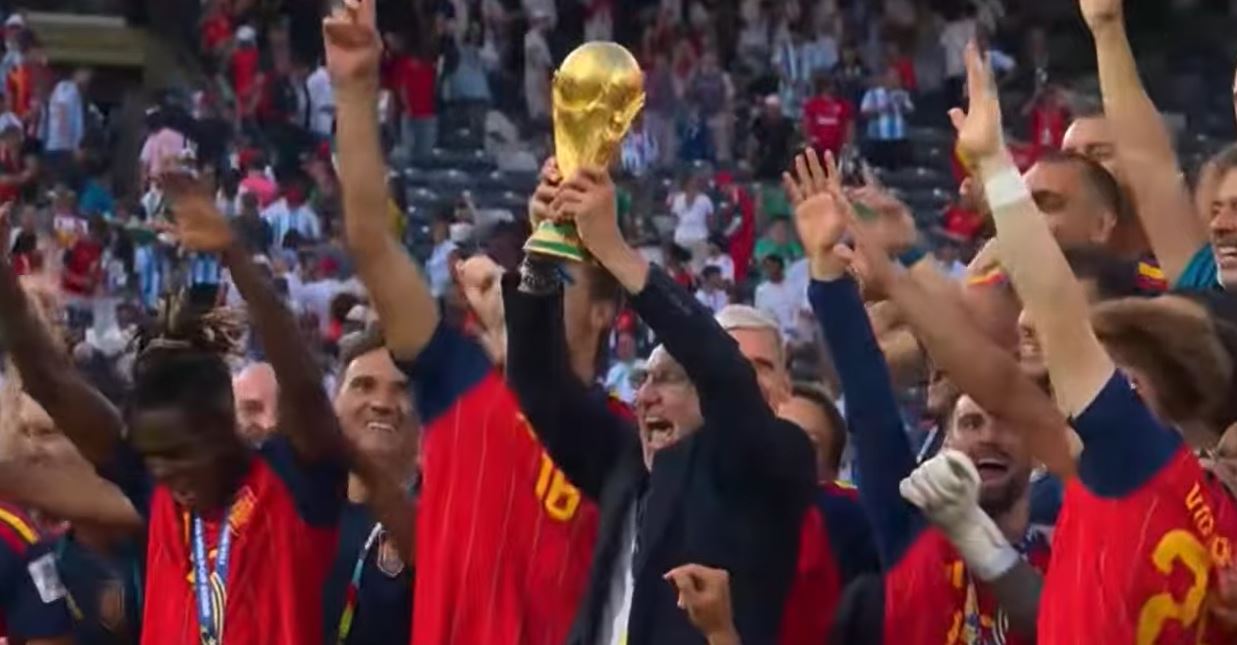
Spain’s head coach Luis de la Fuente lifting the World Cup trophy


