




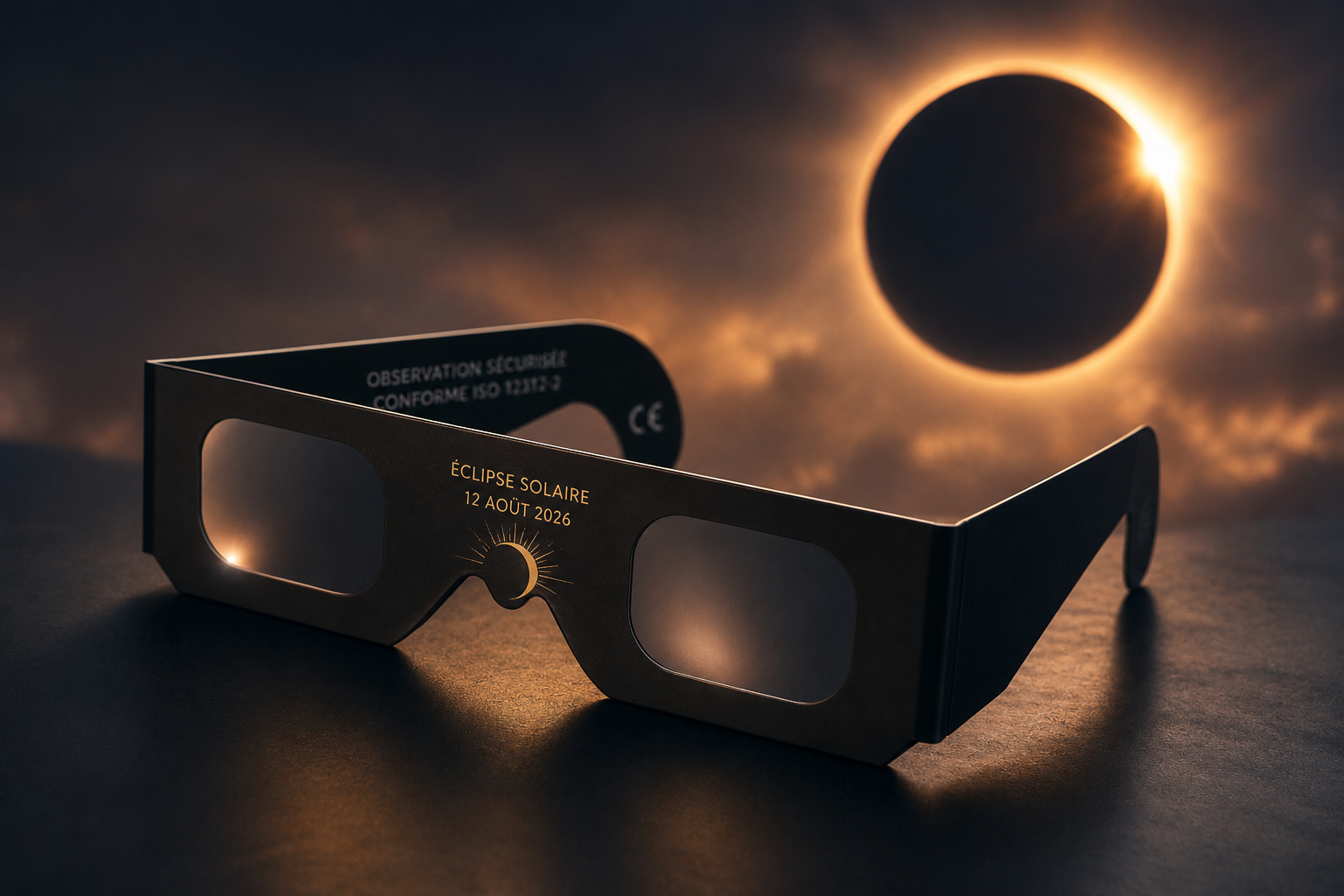

After the celestial spectacle of August 12, one question is on many people's minds: should you keep your eclipse glasses for a future observation, or is it better to retire them permanently to the museum of memories ? Benoît Reeves' recommendations call for the utmost caution.
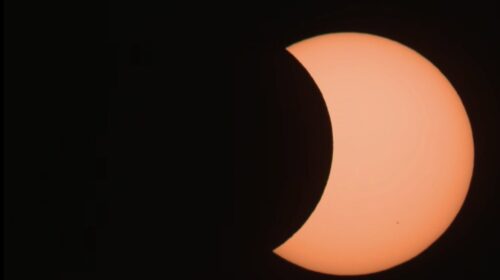
Solar Eclipse on Wednesday, August 12, 2026
August 12, 2026 will remain etched in the memories of astronomy enthusiasts. From Iceland to Spain, via Greenland and several parts of Europe, millions of observers looked up at the sky to witness one of the year's major astronomical events: a total solar eclipse.
For many, the event came with a small object that has become almost as iconic as the eclipse itself: the famous cardboard or plastic solar glasses, essential for observing the Sun without putting one's eyes at risk.
Once the eclipse is over, a very simple question arises: can these glasses be kept and reused during a future eclipse?
The answer requires some nuance. And when it comes to looking directly at the Sun, it is always better to err on the side of caution.
« It is unwise to reuse eclipse glasses »
 We sought the recommendations of Benoît Reeves, son of the eminent astrophysicist Hubert Reeves and himself a science lecturer, who has observed celestial phenomena for many years and shares this passion for astronomy.
His advice is unequivocal :
« It is unwise to reuse eclipse glasses because the protective surfaces of the lenses can easily become scratched and allow sunlight through, even through tiny gaps. »
And Benoît Reeves adds an idea that is both cautious and poetic: rather than putting them back on for a future eclipse, he prefers to keep them as souvenirs.
« It is therefore preferable to keep them as collector's items, which I have happily done since the 1999 eclipse, bringing my collection to six pairs with the ones we had in Iceland on August 12, 2026. »
This turns simple viewing glasses into genuine little witnesses to astronomical history.
Glasses that are not ordinary sunglasses
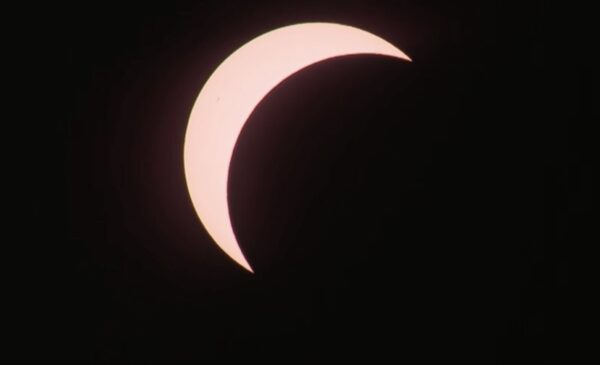 Solar Eclipse on Wednesday, August 12, 2026
Why such caution ?
Because a pair of glasses designed for viewing an eclipse is nothing like ordinary sunglasses.
Solar radiation is extremely intense. Even very dark sunglasses do not provide sufficient protection for looking directly at our star. Glasses specifically designed for eclipses use a solar filter capable of significantly reducing visible, ultraviolet and infrared radiation.
The international reference standard is ISO 12312-2, which applies to filters intended for direct observation of the Sun. The American Astronomical Society points out that glasses complying with this standard must provide extremely low light transmission and meet specific requirements regarding UV and infrared radiation.
In other words, what protects the eye is not the cardboard frame or its dark appearance, but the solar filter itself.
And that is precisely where the problem of reusing eclipse glasses lies.
The danger can be invisible
A pair of glasses may look perfectly fine at first glance and yet have suffered damage.
A scratch, puncture, tear or separation of the filter can compromise its protective capability. The American Astronomical Society therefore recommends immediately discarding any filter showing a scratch, puncture, tear or attachment defect.
NASA takes the same cautious approach: before each use, eclipse glasses should be inspected, and any pair showing damage should be discarded.
The issue is therefore less the theoretical aging of the product than its actual condition.
Glasses that have spent several years in a drawer, box, car or attic may have been exposed to mechanical stress, humidity, friction or temperature fluctuations.
And even a tiny deterioration of the filter may be enough to undermine confidence in its protective performance.
1999 : nearly three decades later
The question is particularly relevant for everyone who kept their glasses from the August 11, 1999 eclipse.
At the time, millions of French people had bought or received these glasses, which have since become genuine souvenirs.
Twenty-seven years later, some brought them back out for the August 12, 2026 eclipse.
But a pair of glasses kept since 1999 should certainly not be considered automatically safe simply because it appears intact.
Current recommendations emphasize the product's origin, its compliance with the applicable standard and, above all, its physical condition.
For Benoît Reeves, the solution is simple: keep them as souvenirs rather than take the slightest risk with your eyesight
His own experience is particularly telling: he has kept his various pairs since 1999 and has now added those used in Iceland on August 12, 2026.
A collection that, in itself, tells the story of several decades of observing the sky.
So, can recent eclipse glasses actually be reused ?
This is where an important distinction needs to be made.
The answer is not necessarily « never ».
The American Astronomical Society states that eclipse glasses can be reused when they are relatively recent, when their manufacturer has had their compliance verified by a competent laboratory, and when they are completely intact: no scratches, no tears, no punctures and no separation of the filter.
The same organization points out that there is no universal expiration date allowing us to say that a pair automatically becomes dangerous after a specific number of years. Some older recommendations referring to three years do not necessarily apply to recent products that comply with current standards.
But this does not mean that you should simply pull any old pair out of a drawer and put it back on.
Provenance matters enormously
Which brands should you choose ?
For those already preparing for the next eclipse, several manufacturers specialize in solar filters.
The American Astronomical Society publishes a list of manufacturers whose products have been verified against the applicable safety requirements for solar viewing glasses and devices. These include American Paper Optics, Rainbow Symphony, Baader Planetarium/AstroSolar, Lunt Solar Systems, Thousand Oaks Optical, DayStar Filters and Seymour Solar.
This is not a commercial ranking: manufacturers are listed alphabetically, not according to any particular preference.
Consumers should also be wary of products sold on marketplaces without clear traceability. The AAS recommends choosing recognized manufacturers or their officially identified retailers.
Simply seeing the words « ISO 12312-2 » printed on a pair of glasses should therefore not be enough to reassure a buyer: the product's origin and the manufacturer's reliability are essential.
The golden rule: when in doubt, throw them away
For the general public, the simplest advice is probably the best.
Before any solar observation, carefully inspect the filters.
No scratches.
No significant creases.
No holes.
No tears.
No separation between the filter and the frame.
No doubt about the product's origin or compliance.
If any of these conditions is not met, the glasses should be discarded.
NASA also reminds observers never to use eclipse glasses in front of an optical device — such as a camera, binoculars or telescope — assuming that glasses worn over the eyes will be enough to protect the observer. The rays concentrated by these instruments can damage the filter and cause serious eye injury. For astronomical instruments, a specifically designed solar filter must be installed at the front of the instrument.
Glasses to keep… but not necessarily to reuse
So, what should you do with your August 12, 2026 eclipse glasses ?
Benoît Reeves' answer ultimately offers an elegant compromise: don't throw them away, but don't necessarily reuse them
They can become souvenirs.
In a few years, a pair bearing the date August 12, 2026, perhaps with the viewing location written on the frame, will tell the story of an experience that will not be repeated for a long time.
For some, they will become part of a collection. For others, they will be slipped into a photo album, kept with airline tickets or alongside a photograph of the eclipse.
This is precisely the choice made by Benoît Reeves, who has kept his glasses since the 1999 eclipse and has now added those used in Iceland.
Safety before nostalgia
A solar eclipse is an exceptional spectacle, but it should never make us forget one fundamental rule: the Sun does not forgive inadequate protection
Retinal injuries caused by improper solar observation can be serious and sometimes irreversible. The difficulty is that an injury may not be felt immediately: the absence of pain at the time of observation therefore does not mean that the eye has suffered no damage.
That is why, when a pair of glasses is old, damaged or simply questionable, it is better not to take the risk.
The next time we look to the sky, there will always be time to obtain a new certified pair.
As for those from August 12, 2026, they can quietly join the 1999 pair in a memory box.
After protecting our eyes for a few minutes, they can now protect something else: the memory of a great encounter between Earth, the Moon and the Sun.
The next solar eclipses
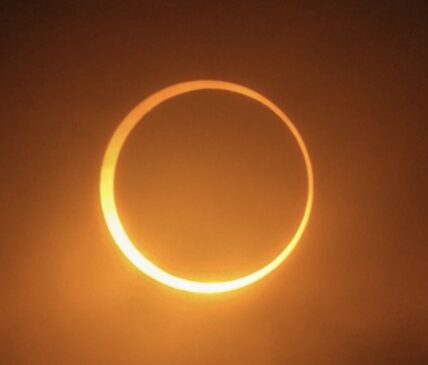 Solar Eclipse on Wednesday, August 12, 2026
The next major event will be an annular solar eclipse on February 6, 2027, visible in particular from parts of South America and Africa. Then comes one of the most eagerly anticipated astronomical events in Europe: on August 2, 2027, a total solar eclipse will cross southern Spain, as well as Morocco, Algeria, Tunisia, Libya, Egypt, Saudi Arabia and Yemen. Parts of Europe will also experience a partial eclipse. These dates and visibility areas are confirmed by NASA.
For these upcoming solar events, the rule remains unchanged: never look directly at the Sun without an appropriate solar filter. The August 12, 2026 glasses should therefore only be reused if they meet the applicable safety requirements and are perfectly intact; when in doubt, it is better to keep them as souvenirs and use a new, reliable pair.
The Next Lunar Eclipses
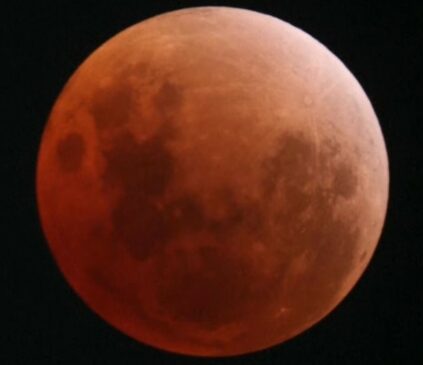 Lunar Eclipse on Tuesday, March 3, 2026
Moon enthusiasts will also have plenty of opportunities to look to the skies. A partial lunar eclipse will take place on August 28, 2026, visible in particular from Europe, Africa and the Americas. This will be followed by a penumbral lunar eclipse on February 20, 2027, visible notably from the Americas, Europe and Africa. NASA also provides a list of upcoming lunar eclipses and their visibility areas.
Unlike solar eclipses, lunar eclipses do not require any special glasses: looking at the Moon as it passes through Earth’s shadow poses no danger to the eyes. Eclipse glasses can therefore remain safely in their box during these events.
For astronomy enthusiasts, the calendar is therefore particularly rich. But one essential distinction should always be kept in mind: eclipse glasses are designed to observe the Sun, not the Moon. For every solar eclipse, appropriate, reliable and perfectly intact eye protection remains essential; for a lunar eclipse, all you need to do is look up at the sky.
All the more reason to treasure the memory of 2026… but, when it comes to observing the Sun again, make sure you have reliable protective equipment in perfect condition.


